LSC, pour Life, Structure, and Cognition (Vie, Structure et Cognition), est une nouvelle initiative portée par Yves Barral (ETH Zurich), Mikhail Gromov (IHES, Université Paris-Saclay), Robert Penner (IHES, Université Paris-Saclay) et Vasily Pestun (IHES, Université Paris-Saclay).
Le but de cette rencontre est de faire le point chaque année sur les dernières avancées des composants du LSC, et d’explorer les modalités d’un progrès coopératif entre…
Félicitations à l'équipe Romet-Lemonne / Jégou pour ce nouvel article publié dans JoVE:
Using Microfluidics and Fluorescence Microscopy to Study the Assembly Dynamics of Single Actin Filaments and Bundles
Abstract
In order to decipher the complex molecular mechanisms that regulate the assembly and disassembly of actin filaments, it is a great asset to monitor individual reactions…
Félicitations à l'équipe Ribes pour ce nouvel article publié dans PLOS Genetics!
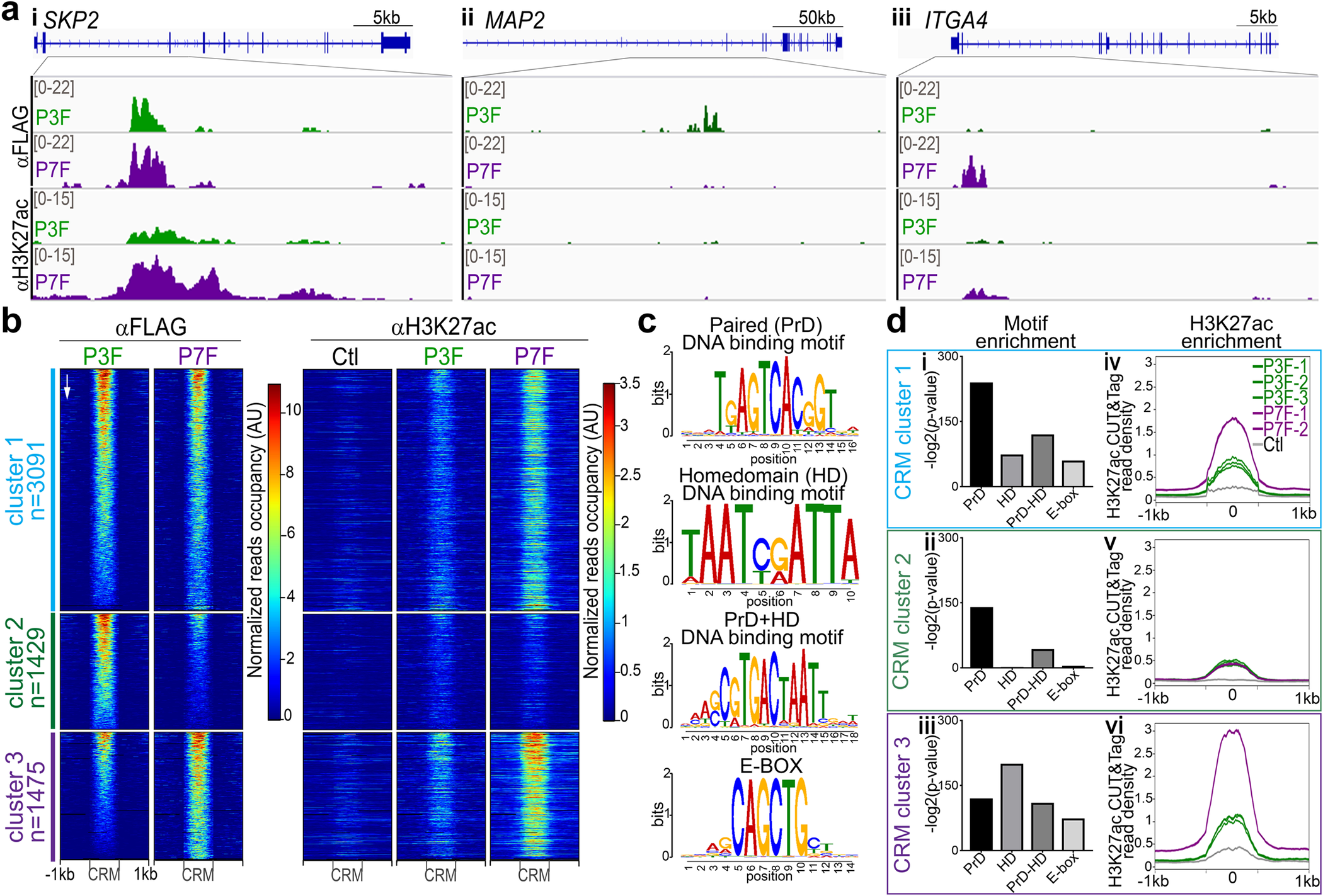
Divergent transcriptional and transforming properties of PAX3-FOXO1 and PAX7-FOXO1 paralogs
Abstract
The hallmarks of the alveolar subclass of rhabdomyosarcoma are chromosomal translocations that generate chimeric PAX3-FOXO1 or PAX7-FOXO1 transcription factors. Overexpression of either PAX-FOXO1s results in related cell transformation in animal models. Yet, in patients…
La plateforme ImagoSeine de l'Institut Jacques Monod, en collaboration avec l'Institut Cochin, organise les 21èmes journées du RIME (Réseau d'Imagerie en Microscopie Électronique) du 1er au 3 juin prochain dans l'amphi Buffon.
Ces journées porteront sur le thème :
Les techniques de localisation moléculaire et chimique en microscopie électronique
PROGRAMME :
Mercredi 01 juin 2022
Session 1 :
14h30 - 15h00 …
Vient de paraitre dans Yeast Functional Genomics pp 35-55
A Modified Cross-Linking Analysis of cDNAs (CRAC) Protocol for Detecting RNA–Protein Interactions and Transcription at Single-Nucleotide Resolution
by:
Drice Challal
Jessie Colin
Tommaso Villa
Domenico Libri
Abstract
Detecting protein–RNA interactions in vivo is essential for deciphering many important cellular pathways. Several…
Vient de paraître dans Yeast Functional Genomics pp 275-292
Quantitative Proteomics in Yeast : From bSLIM and Proteome Discoverer Outputs to Graphical Assessment of the Significance of Protein Quantification Scores
By
Nicolas Sénécaut
Pierre Poulain
Laurent Lignières
Samuel Terrier
Véronique Legros
Guillaume Chevreux
Gaëlle Lelandais
Jean-Michel Camadro
Un nouvel article publié dans médecine/sciences par l'équipe Pintard :
The kiss of life: Aurora A embraces the phosphate of its cofactor Bora to trigger mitotic entry
La plupart des organismes vivants pluricellulaires sont constitués d’un grand nombre de cellules très différentes. À l’exception des gamètes, qui sont le produit d’une division cellulaire particulière (méiose), toutes…
Invité par Nikos Konstantinides, Robin Hiesinger (Professor and Head of Neurobiology Division, Institute for Biology, Free University Berlin, Germany) donnera le 17/05/2002 à 11h45 un séminaire sur le thème :
How does a neuron decide when and where to make a synapse?
Precise synaptic connectivity is a prerequisite for the function of neural circuits, yet individual…
Sylvain Gabriele (University of Mons, Belgium) donnera un séminaire le 20 mai prochain à 11h45 en salle François Jacob :
Mechanobiology of epithelial cells: confinement, neighbours and curvature
The Mechanobiology & Soft Matter group belongs to the Interface and Complex Fluids Laboratory at the University of Mons. We seek to understand the basic physical principles underlying force…
Un nouvel article publié par l’équipe Duharcourt dans Developmental Cell!
Paramecium Polycomb repressive complex 2 physically interacts with the small RNA-binding PIWI protein to repress transposable elements
Summary
Polycomb repressive complex 2 (PRC2) maintains transcriptionally silent genes in a repressed state via deposition of histone H3K27-trimethyl (me3) marks. PRC2 has also been implicated in silencing transposable elements (TEs), yet how PRC2 is…