Skip to content Skip to footer

Former Camadro Lab / ProtéoSeine – SIRT1 mediates brain metabolic and developmental consequences of methionine synthase deficiency in inborn errors of cobalamin metabolism

The former Camadro Lab and the ProtéoSeine platform contributed to the publication of a new article in Cell Reports Medicine: SIRT1 mediates brain metabolic and developmental consequences of methionine synthase deficiency in inborn errors of cobalamin metabolism Abstract: Inborn errors of vitamin B12 metabolism (IECM) resulting from impaired methionine synthase (MTR) activity cause severe cognitive and neurological…

Read More

Ladoux/Mege Lab – Thermal-driven H-bond reconfiguration for bioinspired high-strength anisotropic supramolecular hydrogels

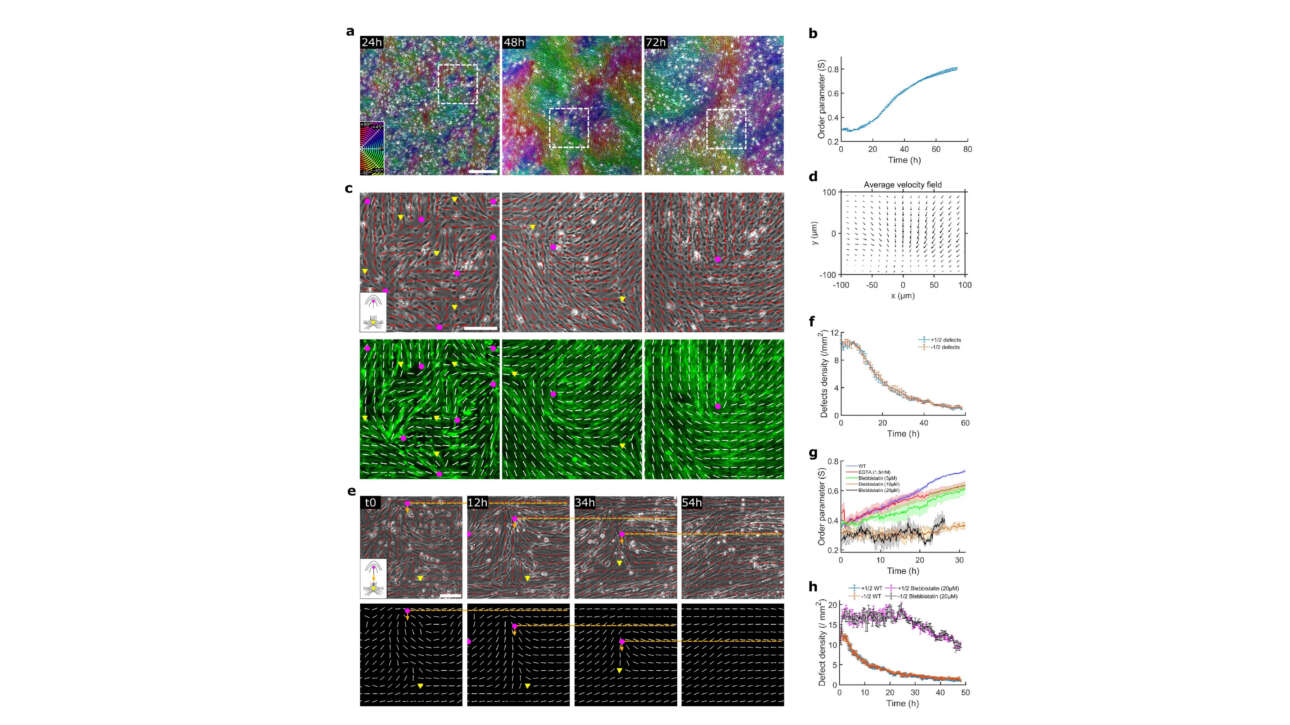
The Ladoux/Mège Lab  contributed to the publication of a new article in Materials Horizons: Thermal-driven H-bond reconfiguration for bioinspired high-strength anisotropic supramolecular hydrogels Astract: Natural anisotropic tissues, such as tendons and cartilages, achieve remarkable mechanical properties and various biofunctions through oriented hierarchical structures. Inspired from organisms, we develop a synergistic molecular and structural engineering technique based on…

Read More

Ingénieur de recherche (H/F) en apprentissage automatique appliqué à la génomique évolutionnaire

Candidatez sur le portail emploi CNRS avant le 30 mars Description du Poste Les Missions Le/la candidat·e sera recruté.e dans le cadre d’un projet financé par la Fondation pour la Recherche Médicale visant à caractériser l’origine évolutive des maladies génétiques complexes humaines à partir de données génomiques anciennes et modernes. La mission consistera à concevoir et…

Read More

Minc Lab – A cross-species analysis of cell wall mechanosensors

The Minc published a new article inMolecular Biology of the Cell: A cross-species analysis of cell wall mechanosensors Abstract: The Cell Wall (CW) protects fungal cells from various challenges making its integrity essential for cell survival. CW integrity is monitored by transmembrane sensors that activate effectors to promote CW synthesis in response to injuries. Sensors of the…

Read More

The Institut Jacques Monod and CLAS des Grands Moulins send cancer to the moon with 2,500 voices!

On World Pediatric Cancer Day, February 15, the 2500 voices collective launched a challenge: to collectively travel 384,400 km to send cancer to the moon! Members of the Institut Jacques Monod and CLAS des Grands Moulins rose to the challenge! During two gatherings, they covered a total of 631.8 km!                   2500 voices is a collective that brings…

Read More

Leon Lab – Ist2 is a phospholipid scramblase that links lipid transport at the ER to organelle homeostasis

The Léon Lab contributed to the publication of a new article in Journal of Cell Biology: Ist2 is a phospholipid scramblase that links lipid transport at the ER to organelle homeostasis Abstract: Lipid scramblases allow passive flip-flop of phospholipids between bilayer leaflets, thereby promoting membrane symmetry. At the endoplasmic reticulum (ER), where phospholipid synthesis is restricted to…

Read More

Pintard Lab – The SETD2 L1609P mutation found in leukemia disrupts methyltransferase activity and reduces histone H3K36 trimethylation

The Pintard Lab contributed to the publication of a new article in Journal of Biological Chemistry: The SETD2 L1609P mutation found in leukemia disrupts methyltransferase activity and reduces histone H3K36 trimethylation Abstract: SETD2 is the primary methyltransferase responsible for generating H3K36me3, an epigenetic mark that is essential for transcriptional regulation and chromatin integrity. SETD2 mutations are frequently observed in…

Read More

Konstantinides Lab – Gene expression cartography of a developing neuronal structure

The Konstantinides Lab published a new article in Developmental Biology: Gene expression cartography of a developing neuronal structure Abstract: Brains are complex structures comprising thousands to billions of neurons that belong to thousands of different neuronal types. These neurons often come from different progenitor domains and have very diverse developmental histories, yet they need to find…

Read More

Pintard Lab – Molecular basis for the activation of Aurora A and Plk1 kinases during mitotic entry

The Pintard Lab published a new article in The EMBO Journal: Molecular basis for the activation of Aurora A and Plk1 kinases during mitotic entry Abstract: The evolutionarily conserved, intrinsically disordered protein Bora is critical for initiating the activation of mitotic kinases. Once phosphorylated at Ser112 by Cyclin A-Cdk1 kinase, phospho-Bora activates unphosphorylated Aurora A kinase (AURKA),…

Read More

Ladoux/Mège Lab / Plateforme ImagoSeine – Cytoplasmic crowding acts as a porous medium reducing macromolecule diffusion

The Ladoux/Mège Lab and the ImagoSeine platform contributed to the publication of a new article in PNAS: Cytoplasmic crowding acts as a porous medium reducing macromolecule diffusion Abstract: Intracellular transport of macromolecules is crucial for the proper functioning of most cellular processes. Although intracellular crowding is known to strongly alter macromolecule mobility, how cytoplasmic structures physically modulate diffusion…

Read More