Skip to content Skip to footer

Plateforme ImagoSeine – Myocardial disarray drives metabolic inefficiency in human cardiomyocytes

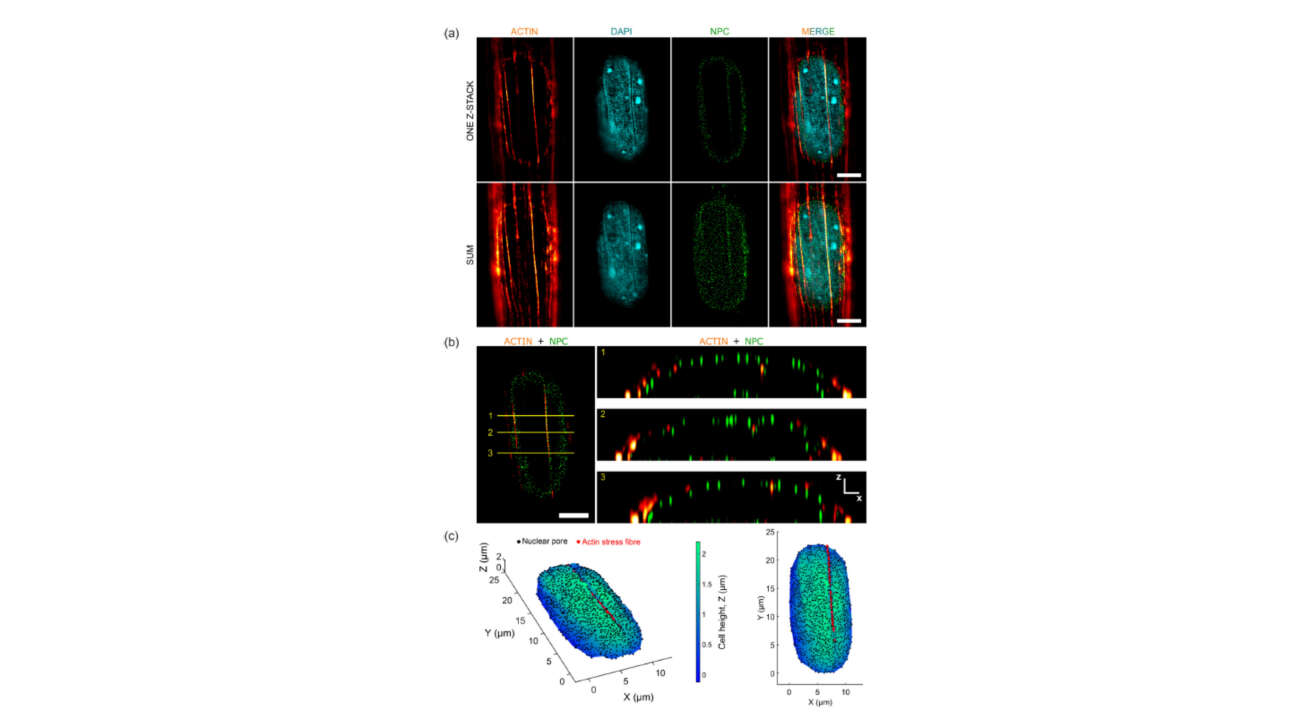
The ImagoSeine plaftorm contributed to the publication of a new article in Communication Biology: Myocardial disarray drives metabolic inefficiency in human cardiomyocytes   Abstract: Adult cardiomyocytes are embedded within a highly organized myocardial microenvironment that imposes critical geometric cues essential for the alignment and distribution of organelles and the shaping of their unique, rectangular cellular morphology. Despite the…

Read More

Rising Talents France 2025 – L’Oréal-UNESCO For Women in Science – Ludivine Roumbo

L'Institut Jacques Monod (CNRS | Université Paris Cité) est fier de vous annoncer que Ludivine ROUMBO, doctorante dans le laboratoire "Cycle cellulaire et développement" est lauréate du Prix Jeunes Talents France 2025 Fondation L'Oréal - UNESCO Pour les Femmes et la Science ! The Institut Jacques Monod (CNRS | Université Paris Cité) is proud to…

Read More

Raote Lab – Towards a unified framework for the function of endoplasmic reticulum exit sites

The Raote Lab contributed to the publication of a new article in Nature reviews molecular cell biology: Towards a unified framework for the function of endoplasmic reticulum exit sites Résumé: Endoplasmic reticulum exit sites (ERES) are specialized, ribosome-free ER subdomains that serve as dynamic portals for COPII-mediated export of proteins from the ER. Beyond their role…

Read More

ProtéoSeine – Immunometabolic reprogramming of macrophages by gut microbiota-derived cadaverine controls colon inflammation

The ProtéoSeine platform contributed to the publication of a new article in Cell Host & Microbe: Immunometabolic reprogramming of macrophages by gut microbiota-derived cadaverine controls colon inflammation   Abstract: Cadaverine is a polyamine produced by the gut microbiota with links to health and disease, notably inflammatory bowel disease (IBD). Here, we show that cadaverine shapes monocyte-macrophage immunometabolism…

Read More

Cytoskeleton club – season 2025-2026

Cytoskeleton Club program for the 2025-2026 season Wed. 15th October Institut Jacques Monod Izeta KANKADZE (PhD student , Fassier/Nicol’s team). Véronique MARTHIENS (Researcher, R. Basto’s team) Friday 14th November Paris Cytoskeleton Day (IJM) Wed 17th December IPGG Sylvain BRUN (assistant professor, A. Guichet’s team)  MONTAGNAC’s team Wed 21st January Institut Pasteur (Auditorium F. Jacob) …

Read More

Best Poster Price at the Gordon Research Conference 2025 Epigenetics

At the Gordon Research Epigenetics conference “Variation: Mechanisms and Impact across Systems” held last August, Thomas Balan (Duharcourt Lab) won the Best Poster Award! Thomas presented his work to decipher the roles of repressive histone marks in programmed DNA elimination in Paramecium.  The Epigenetics GRC is a premier, international scientific conference focused on advancing the frontiers of…

Read More

Greenberg Lab – Epigenetic relay: Polycomb-directed DNA methylation in mammalian development

The Greenberg Lab published a new review in Plos Genetics: Epigenetic relay: Polycomb-directed DNA methylation in mammalian development Abstract: In mammals, repression of germline-specific gene expression is essential for preserving somatic cell identity and preventing disease. Germline gene silencing is often dependent on the presence of promoter 5-cytosine DNA methylation (5meC). Early mammalian development, however, is marked…

Read More

Romet-Lemonne/Jegou Lab – Arp2/3-mediated bidirectional actin assembly by SPIN90 dimers

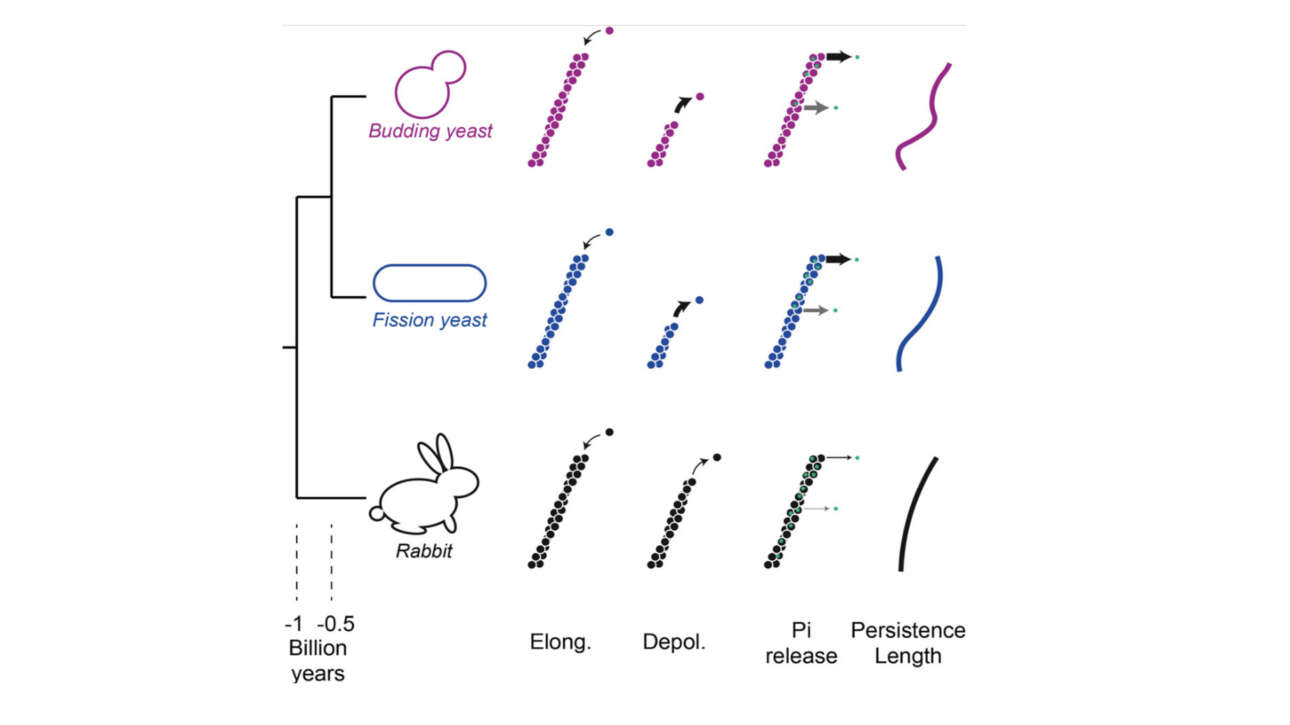
The Romet-Lemonne/Jégou Lab contributed to the publication of a new article in Nature structural & molecular biology: Arp2/3-mediated bidirectional actin assembly by SPIN90 dimers Abstract: Branched actin networks nucleated by the Arp2/3 complex have critical roles in various cellular processes, from cell migration to intracellular transport. However, when activated by WISH/DIP/SPIN90-family proteins, Arp2/3 nucleates linear actin filaments.…

Read More

Ladoux/Mege Lab – Capturing nematic order on tissue surfaces of arbitrary geometry

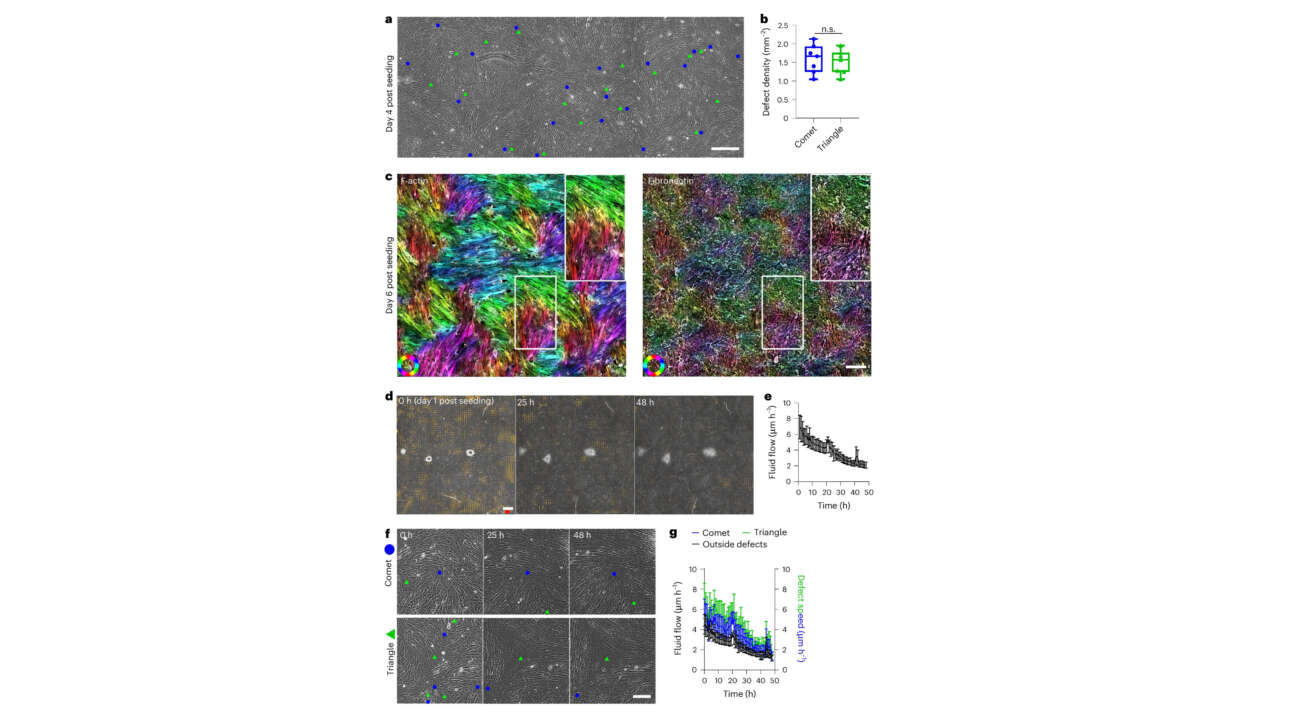
The Ladoux/Mege Lab contributed to the publication of a new article in Nature Communications: Capturing nematic order on tissue surfaces of arbitrary geometry   Abstract: A leading paradigm for understanding the large-scale behavior of tissues is via generalizations of liquid crystal physics; much like liquid crystals, tissues combine fluid-like, viscoelastic behaviors with local orientational order, such as nematic…

Read More

Romet-Lemonne/Jégou Lab – Probing protein–protein interactions with drag flow: a case study of F-actin and tropomyosin

The Romet-Lemonne/Jégou Lab published a new nouvel article in The European Physical Journal E: Probing protein–protein interactions with drag flow: a case study of F-actin and tropomyosin Abstract: Tropomyosins are central regulators of the actin cytoskeleton, controlling the binding and activity of the other actin binding proteins. The interaction between tropomyosin and actin is quite unique:…

Read More